| Developmental Biology |
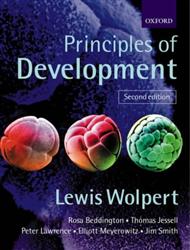
Principles of Development
Description:
This is a revised and updated new edition of the best-selling and popular textbook on developmental biology written by one of the most influential developmental biologists of this century, Lewis Wolpert. Developmental biology is at the core of all biology. It deals with the processes by which the genes in the fertilized egg control cell behaviour in the embryo and so determine its pattern, form, and much of its behaviour. This book emphasizes the principles and key developments in order to provide an approach and style that will appeal to undergraduate students of all levels.
Features:
Suitable for both introductory and more advanced courses, clear illustrations make concepts easier to grasp, numerous summaries and summary diagrams, new companion web site provides additional support for both the student and lecturer.
Amazon Link |
 |
|
Developmental Biology
Synopsis:
"Developmental Biology", seventh edition and on contemporary developmental biology is written primarily for second and final year undergraduate students of biology but will also be useful for introducing graduate students and medical students to developmental biology. In addition to exploring and synthesizing the organismal, cellular and molecular aspects of animal development, the seventh edition expands its coverage of the medical, environmental, and evolutionary aspects of developmental biology. A Vade Mecum CD-ROM (ISBN 0 87893 259 X) is included with every copy of the book. This updated version now also includes Mary Tyler's new laboratory manual, "Developmental Biology: A Guide for Experimental Study", third edition, and now in electronic (PDF) format. The website at www.devbio.com is completely updated and cross-referenced throughout the textbook. Lecturer supplements include: "Instructor's Resource CD" which contains all the figures from the textbook, and 200 overhead transparencies.
Amazon Link |
 |
|
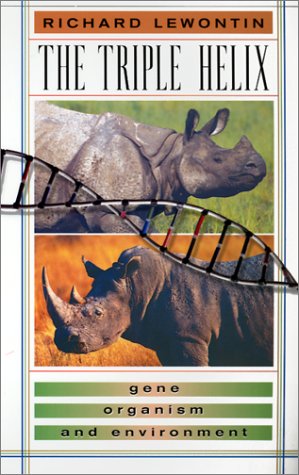
The Triple Helix: Gene, Organism and Environment
Synopsis:
The Triple Helix is a manifesto for the life sciences: "The time has come when further progress in our understanding of nature requires that we reconsider the relationship between the outside and the inside, between organism and environment". Lewontin is not arguing for what he calls "obscurationist holism", but for a more complex interaction between gene, organism and environment, in which they construct each other:
.... it is the biology, indeed the genes, of an organism that determines its effective environment, by establishing the way in which external physical signals become incorporated into its reactions .... Whatever the autonomous processes of the outer world may be, they cannot be perceived by the organism. Its life is determined by the shadows on the wall, passed through a transforming medium of its own creation.
Lewontin argues for a life science that faces up to reality, that tackles the problems of studying subtle processes in complex systems where three-dimensional shape is crucial. The journal Nature "cannot recommend [it] too highly for the many commentators and headline-writers who think that DNA is the blueprint for the organism"--or for their readers.
Amazon Link |
 |
|
Molecular Genetics of Plant Development
Synopsis:
The purpose of this text book is to present classical plant development in modern, molecular-genetic terms. The study of plant development is rapidly changing as genome sequencing projects uncover a multitude of new genes. This book provides a framework for integrating gene discovery and genome analysis into the context of plant development. Taking a systems approach, concepts in plant development are compared with those in animal development, and complex processes, such as flowering and photomorphogenesis, are presented as pathways of gene action regulated by positional and environmental cues. Emphasis is placed on organ formation, such as the development of roots, shoots and leaves, and life cycle events, for example, embryogenesis, seedling development, and the transition to flowering. Examples are drawn primarily from model plants with well-studied genetic systems, particularly Arabidopsis and maize. Molecular Genetics of Plant Development is designed to be used as a textbook for upper division or graduate courses in plant development.
Amazon Link |
 |
|
Developmental Biology: A Guide for Experimental Study
Synopsis: Second Edition is a laboratory manual for college-level courses in developmental biology. It teaches students to work as independent investigators on problems in development, and provides extensive background information and instructions for each experiment. It emphasizes the study of living material, intermixing developmental anatomy in an enjoyable balance, and allows students to make choices in their work. The manual contains challenging experiments requiring minimal equipment that are suitable for both large and small classes. Recipes for solutions, annotated bibliographies, and lists of scientific suppliers are also included.
Amazon Link |
 |
|
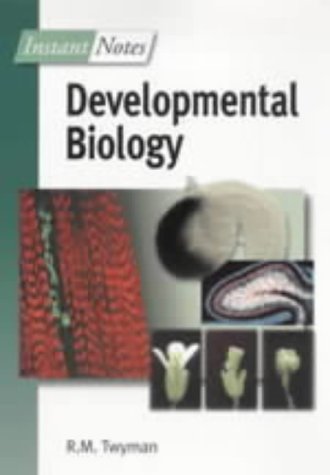
Instant Notes in Developmental Biology
Synopsis:
This work provides useful notes for second and third year undergraduates in development biology. Subjects include: cell fate and commitment; gene expression and regulation; gastrulation in invertebrate embryos; cell specification and patterning in Caenorhabditis elegans; and the cytoskeleton.
Amazon Link |
 |
|
Essential Developmental Biology
Synopsis:
Developmental biology is at the core of biological science, integrating molecular biology, genetics and anatomy. The past 15 years has seen revolutionary advances not only in our understanding of the processes by which an egg develops into an adult, but also in the application of this knowledge to the areas of reproductive technology, drug development and organ replacement. Essential Developmental Biology is a concise and well-illustrated treatment of this subject for undergraduates. Assuming no prior knowledge of anatomy and only the basics of cell biology and genetics, the book starts off by introducing the principles and approaches of developmental biology. The second section covers the characteristic development of each of the principal model species used for research and final chapters are devoted to organ development, predominantly in vertebrates. With an emphasis throughout on the evidence underpinning the main conclusions, this book is suitable as the key text for both introductory and more advanced courses in developmental biology.
Amazon Link |
 |
|
The Biology of Plants
Synopsis:
This introduction to botany has been revised and completely reorganized - from the molecular and cellular through the whole organism to the ecosystem. The authors emphasize the relationships between growth and development, and structure and function, within the all-pervading themes of evolution and ecology. Features of the 6th editon include: coverage of diversity informed by recent sequencing studies and cladistic analyses; inclusion of current advances due to molecular techniques and biotechnology; and new material on ethnobotany and medicinal plants. There are various supplements for this product.
Features:
Coverage of diversity informed by recent sequencing studies and cladistic analyses.
Inclusion of latest advances due to molecular techniques and biotechnology.
New material on ethnobotany and medicinal plants.
Amazon Link |
 |
| Computational Geometry |
Computational Geometry in C
Synopsis:
This is the newly revised and expanded edition of a popular introduction to the design and implementation of geometry algorithms arising in areas such as computer graphics, robotics, and engineering design. The basic techniques used in computational geometry are all covered: polygon triangulations, convex hulls, Voronoi diagrams, arrangements, geometric searching, and motion planning. The self-contained treatment presumes only an elementary knowledge of mathematics, but reaches topics on the frontier of current research, making it a useful reference for practitioners at all levels. The second editon contains material on several new topics, such as randomized algorithms for polygon triangulation, planar point location, 3D convex hull construction, intersection algorithms for ray-segment and ray-triangle, and point-in-polyhedron. A new 'Sources' chapter points to supplemental literature for readers needing more information on any topic. A novel aspect of the book is the inclusion of working C code for many of the algorithms, with discussion of practical implementation issues. The code in this new edition is significantly improved from the first edition (more efficient and more robust), and four new routines are included.
Amazon Link |
 |
|
Computational Geometry: Algorithms and Applications
Synopsis:
This well-accepted introduction to computational geometry is a textbook for high-level undergraduate and low-level graduate courses. The focus is on algorithms and hence the book is well suited for students in computer science and engineering. Motivation is provided from the application areas: all solutions and techniques from computational geometry are related to particular applications in robotics, graphics, CAD/CAM, and geographic information systems. For students this motivation will be especially welcome. Modern insights in computational geometry are used to provide solutions that are both efficient and easy to understand and implement. All the basic techniques and topics from computational geometry, as well as several more advanced topics, are covered. The book is largely self-contained and can be used for self-study by anyone with a basic background in algorithms. In the second edition, besides revisions to the first edition, a number of new exercises have been added.
Amazon Link |
 |
| 3D Computer Graphics |
OpenGL Programming Guide (3rd Edition)
Synopsis:
OpenGL is a powerful software interface used to produce high-quality, computer- generated images and interactive applications using 2D and 3D objects and color bitmaps and images.The OpenGL Programming Guide, Fourth Edition, provides definitive and comprehensive information on OpenGL and the OpenGL Utility Library. The previous edition covered OpenGL through version 1.2. This fourth edition of the best-selling guide describes all of the latest features of OpenGL versions 1.3 and 1.4, as well as the important OpenGL Architecture Review Board (ARB) extensions.You will find clear explanations of OpenGL functionality and many basic computer graphics techniques, such as building and rendering 3D models; interactively viewing objects from different perspective points; and using shading, lighting, and texturing effects for greater realism. In addition, this book provides in-depth coverage of advanced techniques, including texture mapping, antialiasing, fog and atmospheric effects, NURBS, image processing, and more. The text also explores other key topics such as enhancing performance, OpenGL extensions, and cross-platform techniques.This fourth edition has been extensively updated to include the newest features of OpenGL, versions 1.3 and 1.4, including-Cube-mapped texture mapping, Multitexturing, Multisampled antialiasing, Depth texturing and shadowsAdvanced texture application modes Many new example programs have been incorporated as well.
Amazon Link |
 |
|
Computer Graphics using OpenGL
Description:
Designed for undergraduate Computer Graphics courses. Highly practical - and exceptionally accessible - this text combines the principles and major techniques in computer graphics with state-of-the-art examples that relate to things students see everyday on the Internet and in computer-generated movies. Thorough and integrated in approach, it carefully presents each concept, explains the underlying mathematics and why it is important, shows how to translate the math into program code, and shows the result.
This text combines the principles and major techniques in computer graphics with state-of-the-art examples that relate to things students and professionals see every day on the Internet and in computer-generated movies. The author has written a highly practical and exceptionally accessible text, thorough and integrated in approach. Concepts are carefully presented, underlying mathematics are explained, and the importance of each concept is highlighted. This book shows the reader how to translate the math into program code and shows the result. This new edition provides readers with the most current information in the field of computer graphics.
Amazon Link |
 |
|
Computer Graphics with OpenGL
Description:
For junior- to graduate-level courses in computer graphics. Reflecting the rapid expansion of the use of computer graphics and of C++ as a programming language of choice for implementation, this text converts all programming code into the C++ language. Assuming students have no prior familiarity with computer graphics, the authors - both authorities in their field - present basic principles for design, use, and understanding of computer graphics systems using their well-known, and accessible writing style. This new edition is a complete revision, bringing the text up to date with current advances in computer graphics technology and applications.
Key Topics: Assuming readers have no prior familiarity with computer graphics, the authors-both authorities in their field-present basic principles for design, use, and understanding of computer graphics systems using their well-known, and accessible writing style. It includes an exploration of GL, PHIGS, PHIGS+, GKS and other graphics libraries and covers topics such as distributed ray tracing, radiosity, physically based modeling, particle systems, and visualization techniques.
Amazon Link |
 |


